
 By Mikel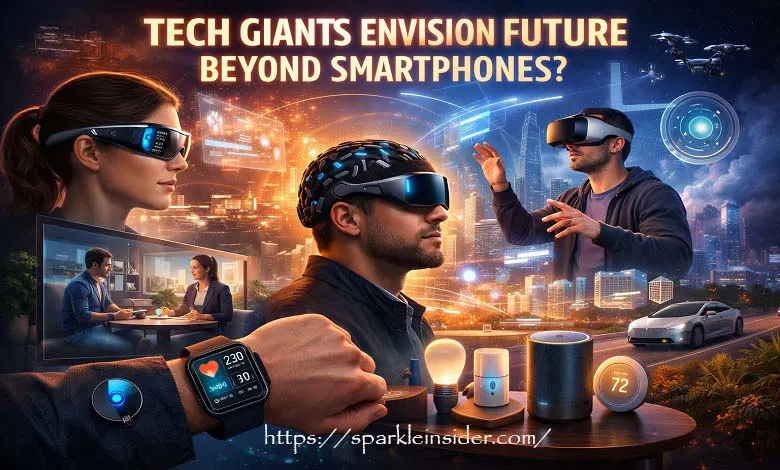
For years, the smartphone has been the centre of our digital lives. We wake up with it, work through it, and often fall asleep scrolling. But something subtle is changing. Increasingly, tech leaders are signalling a shift. Tech giants envision future beyond smartphones, and that vision is slowly turning into real products, real investments, and real conversations.
This doesn’t mean phones will disappear tomorrow. Instead, it suggests evolution. Just like desktops gave way to laptops, and laptops made room for mobile devices, the next platform is forming quietly in the background. The big question isn’t whether change is coming. It’s how it will reshape everyday life.
The Smartphone Era Has Reached Maturity
Smartphones are no longer new or surprising. Most upgrades feel incremental. Cameras improve slightly. Batteries last a bit longer. Screens get brighter. But the core experience remains the same.
When innovation slows, companies start looking ahead. Growth in the smartphone market has plateaued in many regions. That’s one reason tech giants envision future beyond smartphones — they need the next big platform to drive growth and engagement.
History shows a pattern. Technology evolves in waves. First comes disruption, then saturation, then reinvention. We are now standing at that reinvention stage.
Why Tech Giants Envision Future Beyond Smartphones
Smartphones are powerful, but they come with limitations. They require constant attention and isolate users behind screens. They interrupt daily life with endless notifications.
Technology leaders are asking deeper questions. What if computing felt more natural? What if digital information blended into the real world instead of pulling us away from it?
That curiosity is driving billions of dollars in research and development. The focus is shifting from “better screens” to better experiences.
Emerging Technologies Replacing the Central Role of Smartphones
Several technologies are competing to become the next dominant platform. Some are already visible in the market, while others are still developing.
Below is a simplified comparison of leading post-smartphone technologies.
Technologies Shaping the Post-Smartphone Future
| Technology | What It Does | Why It Matters |
| Augmented Reality (AR) | Overlays digital content onto the real world | Devices worn on the body (glasses, watches, pins) |
| Virtual Reality (VR) | Creates fully immersive digital environments | Enables new forms of work and entertainment |
| AI Assistants | Conversational digital helpers | Reduces dependence on apps and manual input |
| Smart Wearables | Devices worn on body (glasses, watches, pins) | Makes tech more seamless and less intrusive |
| Internet of Things (IoT) | Connected devices in homes and cities | Creates ambient, background computing |
Each of these technologies’ points toward the same idea: computing without constantly holding a phone.
Artificial Intelligence as the New Interface
AI is rapidly becoming the centrepiece of innovation. Instead of tapping icons, users can speak naturally. Instead of opening multiple apps, one intelligent assistant can complete tasks.
For example, booking travel today often involves switching between airline apps, hotel websites, and payment platforms. In a future shaped by AI, a single voice command could handle everything.
That shift changes behaviour. It also changes design priorities. If interaction becomes conversational, the traditional app ecosystem may shrink in importance.
When tech giants envision future beyond smartphones, they often describe a world powered by intelligent systems rather than static applications.
Wearables: Subtle but Powerful
Wearables are evolving quickly. Smartwatches already track health metrics like heart rate and sleep cycles. Fitness bands monitor daily activity. Smart glasses are being tested for navigation, communication, and productivity.
The advantage of wearables is subtlety. They reduce friction. Instead of pulling out a phone, users glance at their wrist or speak softly to a device.
Over time, small shifts in habit can create massive cultural changes. Just as texting replaced many phone calls, wearable-based interactions could reduce screen dependency.
Spatial Computing and Immersive Experiences
Spatial computing moves digital content into three-dimensional space. Instead of confining apps to flat screens, information can exist around you.
Imagine working on a 3D design floating in front of your desk. Or attending a virtual meeting where participants appear life-sized. These experiences are already being tested in industries like architecture, education, and healthcare.
The concept may sound futuristic, but early adoption is happening. That’s another strong signal that tech giants envision future beyond smartphones as something immersive rather than handheld.
The Internet of Things and Ambient Technology
Smart homes offer a glimpse of what’s coming. Lights adjust automatically. Thermostats learn preferences. Voice assistants respond instantly.
The phone is currently the control centre for these devices. But eventually, the home itself may become the interface. Sensors, AI, and automation could operate quietly in the background.
This shift represents ambient computing. Technology becomes invisible. It supports daily life without demanding constant attention.
In that sense, the goal is not more devices — it’s less noticeable technology.
Business and Industry Implications
If computing moves beyond smartphones, industries must adapt. App developers may focus on voice-based systems. Retailers could design augmented shopping experiences. Educators might adopt immersive classrooms.
Below is a comparison of how industries may evolve in a post-smartphone world.
Industry Impact of the Post-Smartphone Shift
| Industry | Current Smartphone Model | Future Beyond Smartphones |
| Retail | Mobile shopping apps | AR-based virtual try-ons |
| Education | Online learning apps | Immersive VR classrooms |
| Healthcare | Telemedicine apps | Wearable health monitoring systems |
| Entertainment | Streaming on mobile screens | Mixed reality interactive experiences |
| Workplace | Messaging and productivity apps | AI-driven collaborative environments |
Businesses that prepare early may gain competitive advantages. Those who ignore the shift risk falling behind.
Challenges Slowing the Transition
The move beyond smartphones will not be instant. New hardware remains expensive. Battery life still limits wearable devices. Privacy concerns are growing as AI systems become more advanced.
Consumer habits also resist change. Many people are deeply comfortable with smartphones. Breaking long-established behaviour takes time.
However, history suggests that convenience eventually wins. When touchscreen phones replaced keypad devices, adoption felt gradual. Now it feels obvious.
The same pattern may repeat.
Will Smartphones Disappear Completely?
It is unlikely that smartphones will vanish entirely. Instead, they may evolve into secondary hubs. They could manage connections between multiple wearable and AI-driven devices.
Think of the smartphone as a bridge technology. It connected billions to the internet. The next generation of devices may expand that connection into physical space.
So, when analysts say tech giants envision future beyond smartphones, they are not predicting extinction. They are predicting transformation.
A Human-Centred Future
One encouraging aspect of this shift is its human focus. Many developers now prioritize reducing digital overload. The goal is smoother integration, not more distraction.
Imagine technology that senses stress levels and suggests a break. Or systems that limit unnecessary notifications automatically. These ideas reflect a deeper understanding of user well-being.
In many ways, the next phase is about balance. Less screen time. More natural interaction. Greater personalization.
Conclusion: A Gradual but Powerful Evolution
The smartphone changed modern life. It connected communities, transformed industries, and reshaped communication. But no technology remains dominant forever.
Today, signs are everywhere. Wearables are advancing. AI assistants are becoming more capable. Spatial computing is entering professional environments. Smart environments are growing more intelligent.
All these signals point in one direction: tech giants envision future beyond smartphones, and they are actively building it.
The transition will likely be gradual. Smartphones may coexist with new devices for years. But the center of digital life may slowly shift from handheld screens to immersive, intelligent systems.
The real story is not about replacing phones. It is about redefining how humans interact with technology.
FAQs:
A: Because smartphone innovation has matured, and companies are seeking more immersive and natural computing experiences.
A: AR glasses, AI assistants, wearables, and spatial computing systems are leading candidates.
A: Unlikely. They may evolve into supporting devices rather than primary interfaces.
A: AI will act as the main interface, allowing users to interact through voice and context-aware systems instead of apps.
A: The transition is gradual and already underway, but widespread adoption may take several years.