
 By Mikel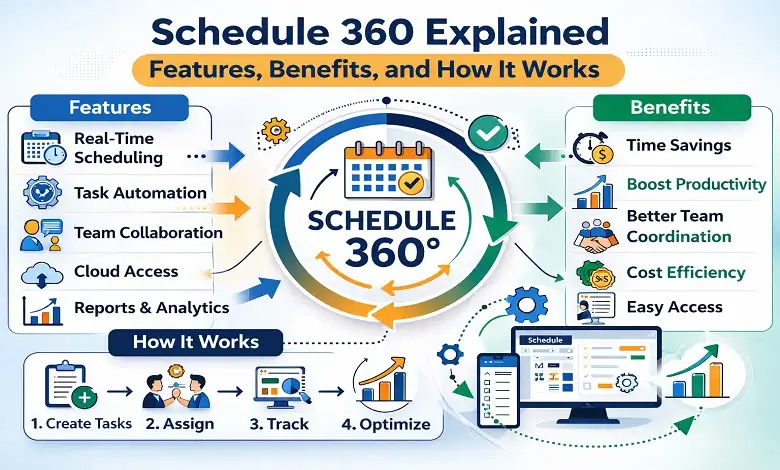
Schedule 360 is becoming a go-to solution for businesses that struggle with managing employee shifts efficiently. What once felt manageable with spreadsheets and group messages often turns stressful as teams grow larger. Missed shifts, double bookings, and last-minute changes can quickly create confusion in any workplace.
That’s where the 360 schedule system makes a real difference. It allows managers to organize shifts digitally, while employees can easily access their work hours through a secure schedule 360 login portal. Everything stays in one place, making communication clearer and more organized.
In this article, we’ll explore how schedule 360 works, its key features, and why many organizations are choosing it to simplify workforce management. If scheduling has ever felt overwhelming, this guide will show you a smarter and more structured approach.
What Is Schedule 360?
At its core, schedule 360 is an employee scheduling and workforce management system. It helps businesses create, manage, and adjust work schedules digitally.
But that description sounds a little too technical, right?
Think of it like this:
Imagine you’re running a busy hospital unit. You need nurses, support staff, and technicians working in rotating shifts. Manually tracking everything becomes exhausting. With this, the entire process moves online. Managers assign shifts. Employees check availability. Swaps happen inside the system.
No chaos. No paper trails.
And the best part? Everything is centralized.
Why Businesses Started Switching to 360 Schedule
A few years ago, many businesses relied on:
- Excel sheets
- Printed weekly rosters
- Phone calls and text messages
- Bulletin board announcements
It worked… until it didn’t.
When teams grow larger, manual systems start breaking down. Double bookings happen. Overtime gets miscalculated. Communication gaps create frustration.
That’s where schedule 360 login portals changed the game.
Employees log in, check their schedules, request time off, and even pick up open shifts — all in one place.
Simple. Efficient. Modern.
Key Features of Schedule 360
Let’s explore what makes it so popular.
1. Employee Scheduling Made Easy
Managers can create weekly or monthly schedules digitally. Drag, drop, assign.
If someone calls in sick, the system helps identify available replacements.
No more frantic calls at 6 AM.
2. Self-Service Portal
The schedule 360 login portal gives employees control.
They can:
- View upcoming shifts
- Request leave
- Swap shifts
- Track hours
It reduces dependency on managers for minor updates.
And employees love that flexibility.
3. Automated Notifications
Imagine not having to remind everyone about schedule changes.
With this, notifications are sent automatically when shifts are updated. This avoids confusion and last-minute surprises.
4. Compliance and Overtime Tracking
Many industries must follow strict labour laws.
It helps track:
- Overtime hours
- Shift limits
- Rest period rules
This reduces compliance risks and payroll errors.
How Schedule 360 Works (Step-by-Step)
Let’s walk through how it typically functions.
Step 1: Manager Creates Schedule
Using the admin dashboard, managers assign shifts based on availability, skill sets, and staffing needs.
Step 2: Employees Access via Schedule 360 Login
Employees use their secure schedule 360 login credentials to access their schedules.
Everything is visible in one dashboard.
Step 3: Shift Changes & Requests
If someone needs time off, they submit a request through the system. Managers approve or decline digitally.
Shift swaps happen inside the platform — no paperwork required.
Step 4: Reports & Payroll Integration
The system tracks attendance and hours worked. This data can be exported for payroll processing.
It’s structured, organized, and far less stressful.
Schedule 360 Features at a Glance
| Feature | What It Does | Why It Matters |
| Online Scheduling | Digital shift creation | Saves time |
| Employee Login Portal | Self-service access | Reduces admin workload |
| Shift Swaps | Employees exchange shifts | Increases flexibility |
| Notifications | Automatic alerts | Prevents miscommunication |
| Reporting Tools | Track hours & compliance | Improves payroll accuracy |
Real-Life Example: A Hospital Setting
Let’s say a hospital emergency department has 60 staff members.
Before using this, the nurse manager spent hours each week creating schedules manually.
If two nurses requested the same day off? Chaos.
- Staff availability was visible in real-time.
- Conflicts were flagged automatically.
- Open shifts were posted inside the system.
- Nurses could volunteer for extra hours.
The result?
Less stress for managers. More transparency for staff.
Benefits of Using Schedule 360
Now let’s talk about what businesses actually gain.
1. Time Savings
Managers save hours every week.
Instead of correcting scheduling errors, they focus on operations.
2. Improved Employee Satisfaction
When employees can log in anytime through schedule 360 login, they feel informed and empowered.
No more guessing about shifts.
3. Reduced Errors
Automated systems reduce double bookings and overtime miscalculations.
Mistakes decrease dramatically.
4. Better Communication
All schedule updates happen in one platform.
No scattered messages.
Who Uses Schedule 360?
Schedule 360 is popular in industries like:
- Healthcare
- Retail
- Hospitality
- Manufacturing
- Education
Basically, anywhere shift work exists.
If your business runs on rotating schedules, 360 schedule tools can help.
Comparing Manual Scheduling vs Schedule 360
| Factor | Manual Scheduling | Schedule 360 |
| Time Required | High | Low |
| Error Rate | Frequent | Minimal |
| Employee Access | Limited | 24/7 via login |
| Communication | Scattered | Centralized |
| Compliance Tracking | Manual | Automated |
The difference is pretty clear.
Is Schedule 360 Difficult to Use?
That’s a common question.
Honestly? No.
Most platforms are designed to be user-friendly. If you can use email, you can use schedule 360 login.
Managers receive basic training. Employees simply log in and view their dashboard.
Even non-technical teams adapt quickly.
Things to Consider Before Using 360 Schedule
Every tool has pros and cons.
Before implementing:
- Ensure internet access for all employees
- Provide login credentials securely
- Offer short training sessions
Change can feel uncomfortable at first.
But once the system becomes routine, teams rarely want to go back.
Why Schedule 360 Is Growing in Popularity
Work environments are changing.
Hybrid models. Flexible shifts. On-demand staffing.
Traditional scheduling methods don’t fit modern work structures anymore.
Schedule 360 bridges that gap.
It gives structure without rigidity.
And in today’s fast-moving work culture, that balance matters.
Final Thoughts
If you’ve ever dealt with confusing Excel sheets, last-minute shift calls, or staff asking, “Am I working tomorrow?”, then you already know how frustrating poor scheduling can be. That’s exactly where Schedule 360 makes a difference. It’s not just another digital tool sitting in the background — it’s a practical fix for everyday workplace chaos. With employee self-service options, smart notifications, compliance tracking, and smooth schedule 360 login access, the entire 360 schedule system feels built for real teams with real challenges.
At the end of the day, businesses don’t just need software — they need simplicity. They need clarity. They need a system that reduces stress instead of adding to it. When scheduling becomes organized and transparent, teamwork naturally improves. And sometimes, that small operational upgrade can create a surprisingly big impact.
FAQs:
A: It’s used for employee scheduling, shift management, and workforce tracking.
A: They use their secure schedule 360 login credentials online.
A: Yes, shift swaps can be managed inside the platform.
A: Yes, both small and large organizations can use it.
A: Yes, it tracks hours and generates reports useful for payroll processing.