
 By Mikel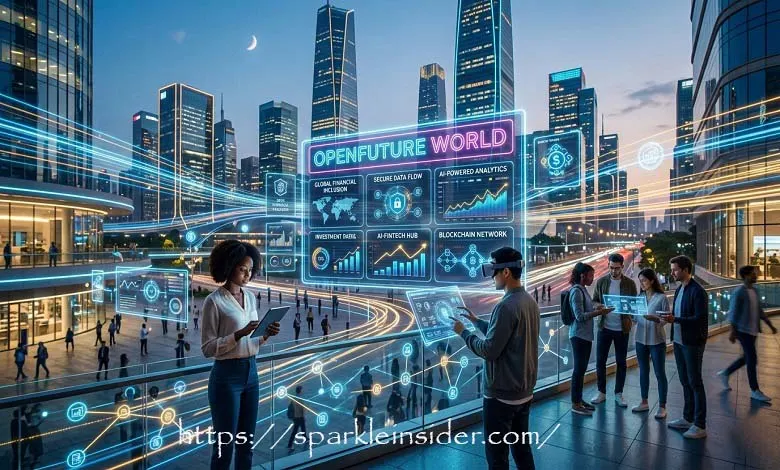
A few years ago, handling money often felt stressful and slow. People had to visit banks, wait in long queues, and deal with confusing systems just to complete simple transactions. Sending money across borders took days, and small business owners frequently lost a portion of their earnings to hidden fees.
Today, the financial experience is quietly transforming. The shift is being driven by ideas connected to OpenFuture World, a concept that is reshaping how financial systems operate and how people interact with them.
This change is not loud or dramatic. It is happening steadily, making finance more accessible, more flexible, and more human.
When Finance Became More Than Just Numbers
Think about a small online seller who creates handmade products and ships them to customers worldwide. In the past, receiving payments from other countries involved delays, extra charges, and a constant struggle to keep track of transactions.
Now, platforms inspired by OpenFuture World allow payments to move faster and more transparently. The seller can see where money comes from, how it moves, and when it arrives. Finance becomes less about waiting and worrying, and more about growing confidently.
This shift makes financial systems feel less like distant institutions and more like everyday tools.
Understanding the Idea Behind OpenFuture World
OpenFuture World focuses on making financial systems more connected and collaborative. Instead of operating in isolated environments, banks, fintech companies, developers, and users become part of a shared ecosystem.
The goal is simple. Financial services should work together rather than operate separately. When systems connect, innovation becomes easier and experiences become smoother.
Instead of treating finance as a closed structure, OpenFuture World encourages openness that allows smarter services to develop naturally.
How Financial Systems Are Evolving
Traditional financial systems were built for stability, but not necessarily for speed or flexibility. OpenFuture World introduces a new approach that encourages adaptability and user control.
| Traditional Finance | OpenFuture World Approach |
| Systems work independently | Systems connect and collaborate |
| Innovation happens slowly | Innovation happens rapidly |
| Users have limited control | Users gain more flexibility |
| Services feel standardized | Services become personalized |
This evolution is not only technical. It changes how people feel about managing their money.
A Real-World Example
Consider a freelance designer who works with international clients. Earlier, she had to deal with delayed payments and expensive transfer fees. Access to loans was also difficult because traditional credit systems did not recognize freelance income properly.
With financial tools shaped by OpenFuture World ideas, she now receives payments almost instantly and can track her earnings in real time. Her work history helps her qualify for small loans without traditional credit requirements.
Finance becomes supportive rather than restrictive.
Innovation That Feels Relatable
Financial innovation often sounds complex, but OpenFuture World brings it closer to everyday life. It encourages transparency, accessibility, and trust.
When people understand how their money moves and grows, they feel more confident about financial decisions. Systems become easier to navigate, and financial management feels less intimidating.
Key Elements Driving Change
The transformation behind OpenFuture World relies on several important innovations.
| Innovation Driver | Role in Financial Future |
| API Connectivity | Connects services smoothly |
| AI Insights | Predicts financial needs |
| Blockchain Layers | Improves transparency |
| Cloud Technology | Supports scalability |
| User-Centric Design | Enhances usability |
These technologies work quietly in the background, yet they create noticeable improvements in daily financial experiences.
Why Businesses Are Interested
Companies see OpenFuture World as an opportunity to build smarter financial services. Startups and established firms can develop apps that connect with payment systems, lending platforms, and investment tools without creating everything from the ground up.
This approach reduces development time and improves customer experiences. Businesses can focus on solving problems rather than building complex infrastructure.
Making Finance More Inclusive
One of the most meaningful aspects of OpenFuture World is its potential to include people who were previously excluded from financial systems.
Many individuals lack formal credit histories or traditional documentation. OpenFuture World encourages alternative solutions such as digital transaction records and behaviour-based assessments.
These new methods create financial opportunities for people who were once overlooked.
Working Alongside Traditional Banking
OpenFuture World does not aim to replace traditional banks. Instead, it promotes collaboration.
Banks adapt to new technologies, fintech companies introduce fresh ideas, and technology providers build the bridges that connect them.
The future of finance lies in cooperation rather than competition.
Challenges on the Path Forward
Every transformation comes with challenges. Security, regulations, and awareness remain important areas that require continuous attention.
OpenFuture World promotes responsible innovation, ensuring that progress happens without compromising safety.
Looking Ahead
Imagine a financial world where payments are instant, borrowing is accessible, and tools adapt to individual lifestyles.
OpenFuture World is guiding finance toward that vision. It is helping systems become more open, more responsive, and more aligned with real human needs.
Final Thoughts
OpenFuture World is reshaping financial innovation by making systems more connected and user-focused. It is not only changing how money moves but also how people interact with financial tools.
The journey is ongoing, yet the direction is clear. Finance is becoming more open, more inclusive, and more supportive.
FAQs:
A: It focuses on creating open and connected financial systems.
A: By encouraging collaboration between financial platforms.
A: Yes, it improves accessibility and flexibility.
A: No, it supports collaboration with traditional institutions.
A: Because it makes financial services more inclusive and efficient.